
A client's story

Strong body, quieter mind.

Krista McAtee came back to strength training wary of free weights and a knee she didn't trust. What she found was more than muscle.

Summarized from Krista's essay "Strong Body, Quieter Mind," published on her Substack, Recode Focus Lab, October 16, 2026. The quotes are hers.

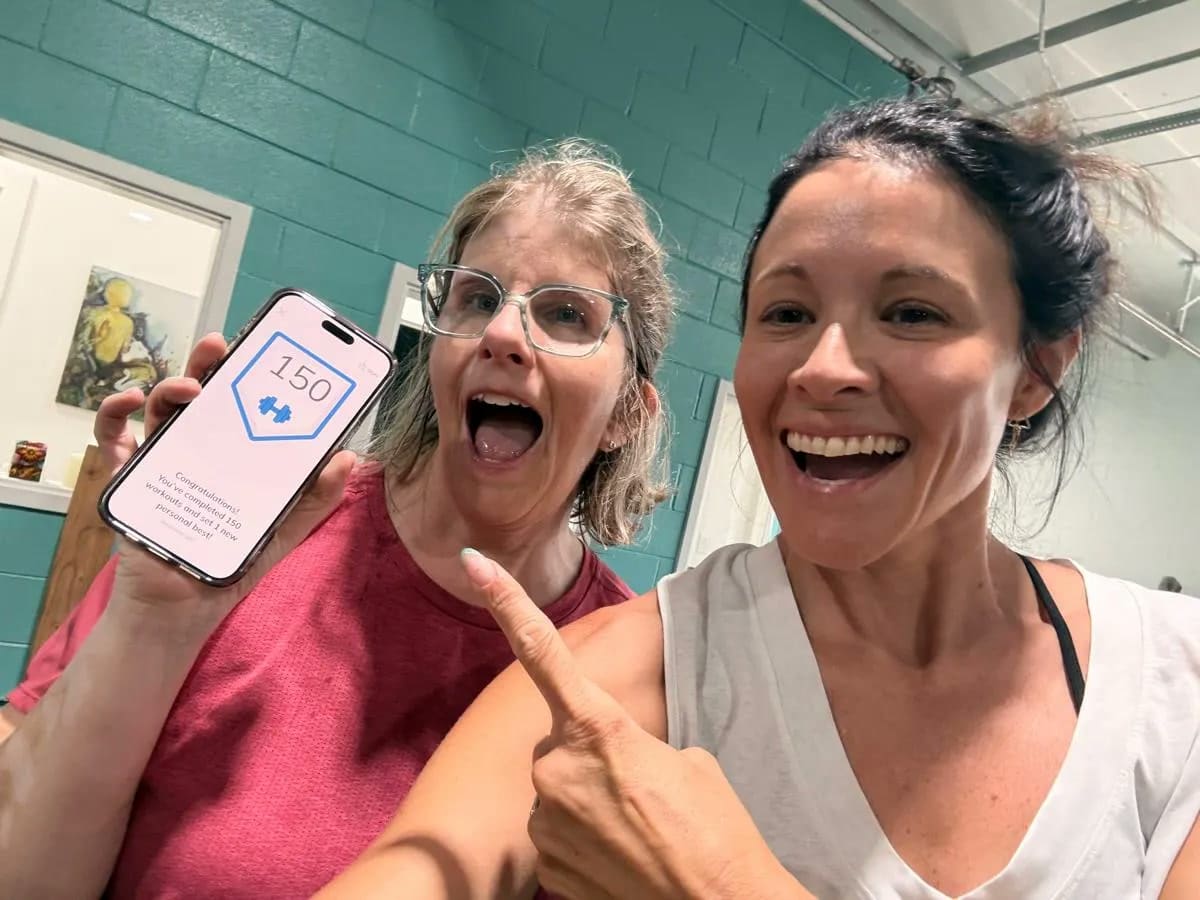
Krista holding up her phone showing 150 workouts, with Vanessa pointing to it and smiling MilestoneKrista and Vanessa celebrating her 150th workout.
“Strength training, for me, is about more than muscle.” Krista McAtee

A knee she didn't trust.

For most of her adult life, Krista lifted on weight machines because they felt safe. About ten years ago, squatting with free weights alone at the Y, she felt something tear in her left knee. It healed, but the fear stayed. She favored that leg and stopped doing exercises she loved.

When she wanted to get back into strength training, a friend recommended Vanessa. Krista joined semi-private sessions, each person on their own program with Vanessa coaching. Training beside people who were stronger and fitter didn't help her confidence at first.

Her knee still pushed back in squats. Vanessa didn't have her avoid them. Instead, Krista learned to focus on what the rest of her body needed to do, and holding a kettlebell for a goblet squat showed her how it all connects.

“The new me knows that if I’m not engaging my whole body, the squat falls apart. Understanding that connection is what lets me squat without pain.”

She now squats with a 40-pound kettlebell, almost the weight of the bar that hurt her ten years ago.
The background loop, off.

Krista has ADHD. To keep from forgetting anything important, her mind runs a constant to-do list: bills, dinner, meetings, deadlines. It's exhausting.

Lifting doesn't leave room for that. Early on, preparing for a deadlift, Vanessa cued her through everything at once: core on, quads on, feet gripping the floor, breathing.

“As I started my lift, my brain’s constant background loop turned off.”

She had to be in her body and in the moment. It's what she likes most about training: it gets her out of her head.

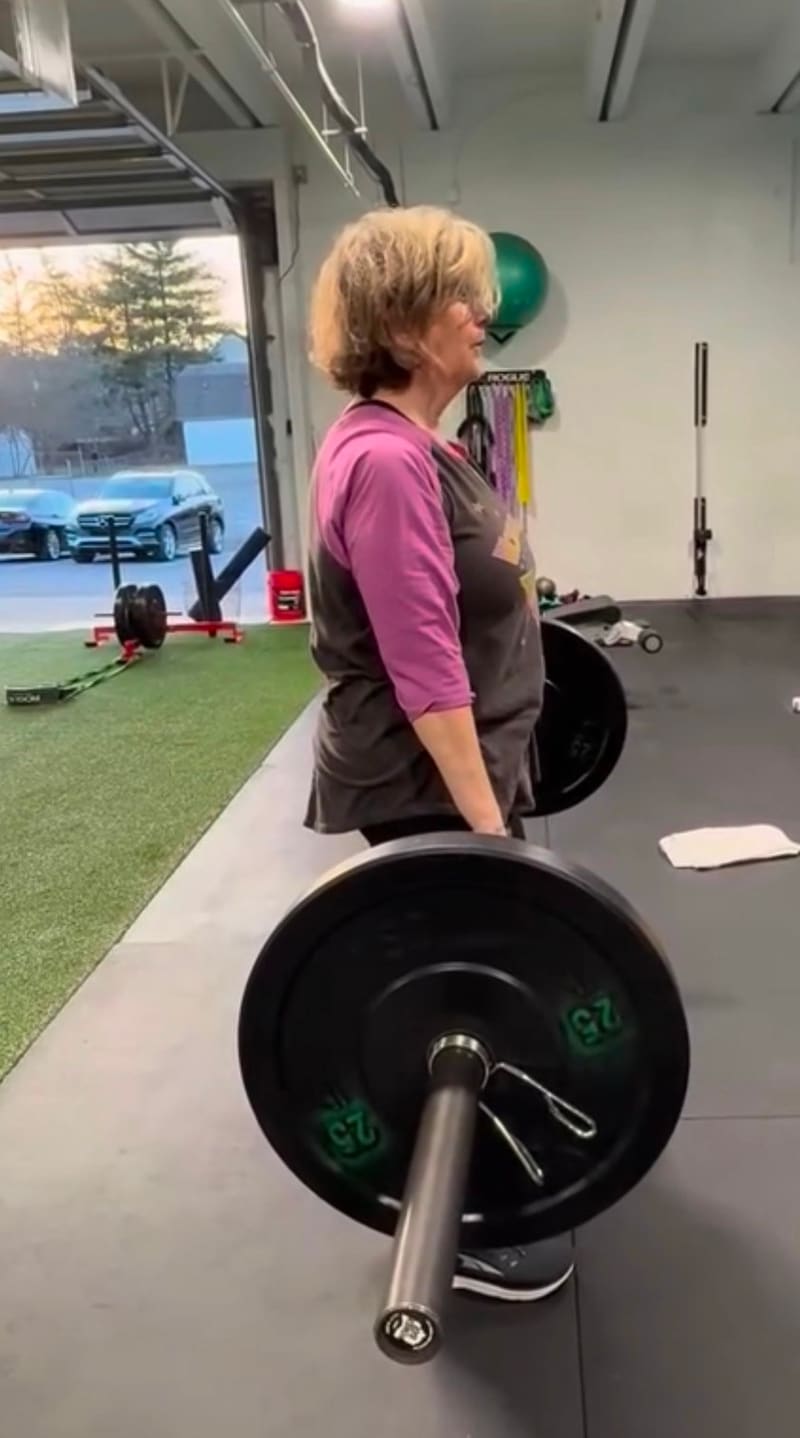
Krista standing tall at the top of a barbell deadlift on the training floor First deadliftKrista's first barbell deadlift, 95 pounds.

Doing it anyway.

Vanessa put moves in Krista's program that she didn't think she could do. One was hanging from a high bar. Krista was sure her grip and elbows would give out, so they started slow, with her feet on the ground.

“Now I’m hanging from the highest bar in the gym, and it has become one of my favorite moves.”

For her first two years, Krista trained in the afternoons, tired after work and skipping weeks. When the gym's schedule changed, she switched to mornings, a time she'd been sure couldn't work for her. After the first week she was hooked, and now it's rare that she doesn't get in twice a week.

“I love going to work with a quiet mind. The afternoon dread is gone.”

She found her people, too: a gym community that values strength, where they “commiserate about early mornings and cheer each other on.” Ten years after the injury, she writes, her brain is finally learning it doesn't have to guard that knee.

Start your own story.

Fifteen minutes, no pressure. See the space, meet Vanessa, and find out if it's your kind of place.